Fortitude
North
AN EXCITING GREENFIELDS DISCOVERY WITH ACCESS TO EXISTING INFRASTRUCTURE
Fortitude North Gold is a highly prospective gold exploration asset within Matsa Resources’ broader Lake Carey Gold Project. This greenfields discovery has quickly emerged as a priority growth opportunity, attributable to encouraging exploration outcomes.
With consistently high-grade drill results, the potential for additional parallel lode systems and openness at strike and depth, Matsa Resources plans to advance drilling and technical work to better define the system and advance it toward a clear resource pathway.
OVERVIEW OF THE DISCOVERY
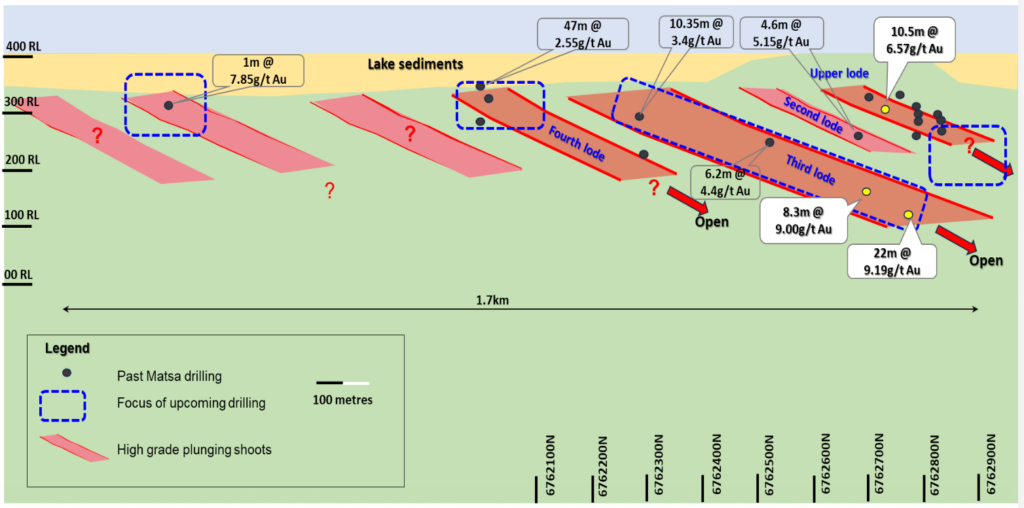
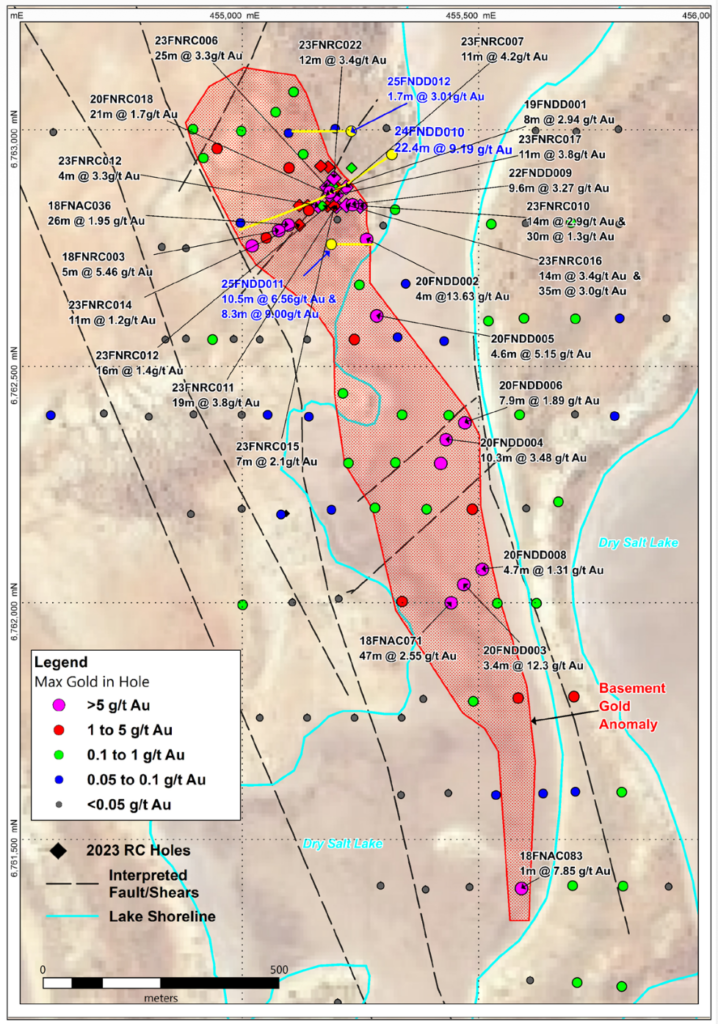
Fortitude North was first discovered by Matsa Resources following an aircore drilling program in 2018. As it stands, the asset is comprised of a 1.7km long mineralised zone that remains open along strike and depth.
Mineralisation is structurally controlled within interpreted dextral slip dilational jog and data offers evidence of a long-lived system with multiple gold forming stages. Subsequently, this suggests that a large system may be present.
Based on what Matsa Resources currently knows, the size of the Fortitude North anomaly is larger than that of the Fortitude Gold Mine.
A GEM IN THE LAKE CAREY GOLD PROJECT CROWN
An asset within the Lake Carey Project, Fortitude North is positioned in the north eastern Goldfields region, in Western Australia. Established mining townships Kalgoorlie and Laverton are located 244km north east and ~70km north, respectively.
In terms of its position within the Lake Carey Project footprint, Fortitude North is located only 6km north of Matsa’s Fortitude gold mine, in the gold endowed Kurnalpi terrain. This terrain is host to numerous world class gold deposits such as Sunrise Dam, Granny Smith and Wallaby.
CLASSIC EASTERN GOLDFIELDS CHARACTERISTICS SIGNAL POTENTIAL EXTRACTION BENEFITS
Fortitude North displays the makings of a classic Eastern Goldfields deposit. Its gold mineralogy is structurally controlled and suggests the presence of stacked lodes.
Stacked gold lodes can be described as multiple, vertically parallel layers of gold mineralisation that occur within a deposit. They form when mineralised fluids infiltrate a series of parallel fractures or fault zones in the host rock, resulting in multiple distinct zones of gold mineralisation.
This structural makeup signals potential benefits to extraction, as it means that multiple gold zones may be accessed from the same mining infrastructure.
There are many major gold deposits in the Eastern Goldfields that feature stacked lode systems, some of the most notable including parts of the Golden Mile at Kalgoorlie and elements of the St Ives gold camp near Kambalda.